

Back
December 1, 2025 | Nic Menezes
Discover the Non-Surgical Facelift Advantages Today
Non-Surgical Facelifts: Benefits, Treatments, and What to Expect
Non-surgical facelifts are a collection of minimally invasive treatments that refresh the face by restoring lost volume, softening lines, and tightening skin-without the recovery time or risks of surgery. This guide explains how injectables, neuromodulators, and collagen-stimulating energy devices can work together to deliver a facelift-like result, and it sets realistic expectations for people who want firmer skin without going under the knife. You’ll find clear explanations of the main benefits, a treatment-by-treatment breakdown, typical costs and recovery timelines, what to expect at Growing Younger Clinic, and practical advice for choosing the right combination of therapies. Our goal is to help you weigh options, understand outcomes, and plan a safe, effective path to a natural-looking refresh.
Why Choose a Non-Surgical Facelift? Key Benefits Explained

“Non-surgical facelift” describes a tailored combination of treatments that restore volume, relax dynamic wrinkles, and stimulate collagen to lift and tighten facial skin. Each modality plays a role: fillers rebuild structural support, neuromodulators soften muscle activity that creates lines, and energy devices (lasers, RF microneedling, plasma-based therapies) provoke controlled remodeling to boost collagen and elastin. Together these approaches reduce sagging, enhance jawline definition, and improve skin texture while maintaining natural expression. Most procedures are done in an outpatient clinic, allowing providers to design plans that match your anatomy and goals.
Many patients prefer gradual, maintainable results over a single dramatic change. Below are the core benefits people cite when choosing non-surgical options-and why they matter.
- Minimal downtime: Many injectable treatments allow a return to regular activities within 24-72 hours.
- Natural results: Strategic volume replacement and subtle tightening preserve facial movement and avoid an “overdone” appearance.
- Collagen building: Energy-based therapies encourage long-term firmness by stimulating collagen and elastin production.
- Customizable: Treatments can be combined and staged to address volume loss, lines, laxity, and texture for a personalized outcome.
These advantages explain why non-surgical strategies are often a first step in facial rejuvenation. Knowing how collagen remodeling accumulates over time helps set realistic expectations for progressive improvement.
What Are the Main Benefits of Non-Surgical Facelifts?
Non-surgical facelifts typically deliver three measurable results: restored facial volume, softened dynamic and static wrinkles, and skin tightening from collagen remodeling. Fillers restore midface support and cheek projection, which indirectly lifts lower-face tissues. Neuromodulators reduce repetitive muscle contractions that deepen lines. Energy-based treatments-like RF microneedling and fractional lasers-use controlled heat or micro-injury to activate fibroblasts and encourage new collagen and elastin over several weeks. Ideal candidates have mild to moderate laxity, want minimal downtime, and prefer gradual, natural improvement achieved by combining these methods.
Next we’ll look closer at the biological processes that produce longer-term tightening and how different treatments affect collagen and elastin.
How Do Non-Surgical Facelifts Stimulate Collagen and Elastin Production?
These treatments stimulate collagen and elastin through three complementary mechanisms: mechanical support, neuromuscular modulation, and controlled tissue repair. Fillers (hyaluronic acid, calcium hydroxylapatite) restore volume and can encourage surrounding fibroblasts to lay down collagen. Neuromodulators reduce repetitive muscle pull, softening creases and preventing further deepening. Energy devices-radiofrequency, microneedling, and fractional CO2 lasers-deliver thermal or micro-injury signals that recruit growth factors and fibroblasts to build new connective tissue over about 6-12 weeks. As collagen increases, skin firms and contours improve, reinforcing the immediate lift from injectables.
Knowing how each mechanism contributes helps you and your provider choose treatments that work together and set realistic timelines for visible change.
What Types of Non-Surgical Facelift Treatments Are Available?
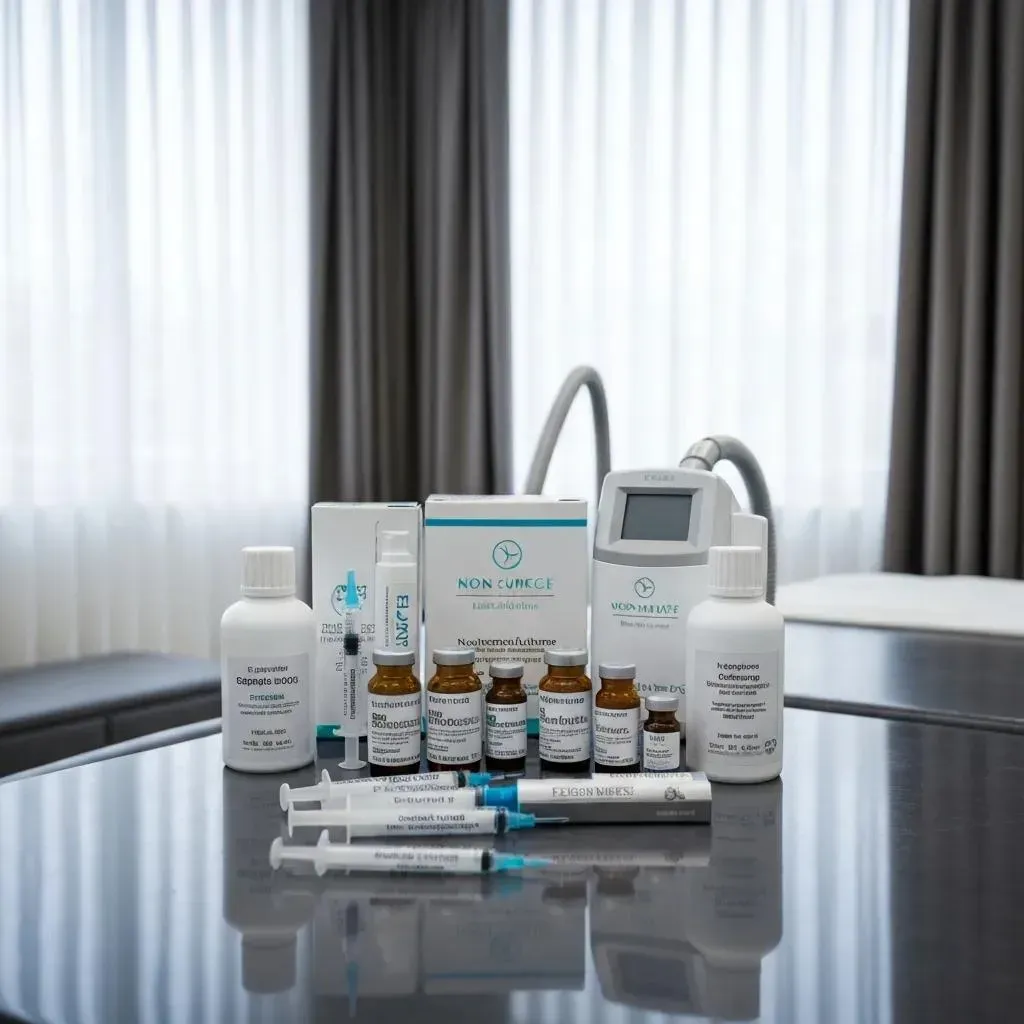
A non-surgical facelift typically blends injectables and energy-based therapies to address three main drivers of facial aging: volume loss, movement-related lines, and skin laxity. The core categories are dermal fillers, neuromodulators, plasma-based lifts (platelet therapies), and advanced lasers or RF microneedling. Each targets a different tissue layer and offers a unique benefit; combining modalities often produces the most natural, lasting results. The table below summarizes mechanisms and expected downtime to help you compare options by concern and tolerance for recovery.
Non-Surgical Facelift Modalities for Facial Rejuvenation
Signs of facial ageing include drooping upper lids, under-eye hollows, wrinkles and folds, nasolabial grooves, and jowling. Aesthetic medicine has progressed to address these changes with techniques such as thread lifts, platelet concentrates, high-intensity focused ultrasound, and radiofrequency. This chapter reviews the ageing mechanisms at various facial layers and the effectiveness of diverse non-surgical approaches-methods that, when mastered, can deliver meaningful results and restore patient confidence. Non-surgical modalities of facial rejuvenation and aesthetics, 2021
| Treatment | Primary Mechanism | Benefit / Typical Downtime |
|---|---|---|
| Dermal Fillers (HA, CaHA) | Restore structural volume and support | Rebuilds cheek/temple volume, softens folds; downtime: mild swelling/bruising 1-7 days |
| Neuromodulators (Botox, Xeomin, Daxxify) | Temporary muscle relaxation | Smooths dynamic lines (forehead, glabella, crow’s feet); downtime: minimal, 0-2 days |
| Plasma Lift (PRP-style) | Growth-factor driven tissue repair | Improves texture and subtle tightening over months; downtime: mild swelling 1-3 days |
| Laser & RF Microneedling (CO2, RF) | Thermal collagen remodeling | Tightens skin and refines texture; downtime: 3-10 days depending on intensity |
This comparison clarifies how each procedure contributes to a non-surgical “facelift” and helps you choose a personalized plan based on recovery tolerance and target areas.
Provider skill and product selection vary between clinics. At Growing Younger Clinic, licensed clinicians work with an M.D. on site and offer dermal fillers, neuromodulators, plasma lifts, and advanced laser treatments. A complimentary consultation helps identify the best combination for your goals. The sections below describe each treatment class and how they’re commonly combined.
How Do Dermal Fillers Restore Facial Volume and Smooth Wrinkles?
Dermal fillers, usually hyaluronic acid (HA) or calcium hydroxylapatite (CaHA), rebuild facial structure by replacing lost volume in the cheeks, temples, and jawline and by softening nasolabial and marionette lines. HA attracts and holds water for an immediate plumping and hydrating effect; CaHA offers stronger structural support and can stimulate collagen over time. Common treatment zones include cheeks, tear troughs, lips, and jawline. Results typically last from about 6 to 18 months depending on the product and individual metabolism, and mild swelling or bruising is normal after injections. Maintenance plans are tailored to each patient’s longevity and goals.
Fillers create the structural foundation that pairs well with neuromodulators and energy treatments for a balanced, lifted result.
What Role Do Neuromodulators Like Botox and Xeomin Play in Wrinkle Reduction?
Neuromodulators temporarily reduce muscle contractions that form dynamic wrinkles, producing smoother skin and slowing the progression of creases. Agents such as Botox, Xeomin, and Daxxify treat forehead lines, glabellar lines, and crow’s feet-and can even soften neck bands. Effects begin within days and typically last 3-6 months (longer with some formulations). By reducing muscle pull, neuromodulators can prolong and refine the results of fillers, creating a more natural-looking rejuvenation when used together.
How Does Plasma Lift Use Your Body’s Healing Power for Skin Tightening?
Plasma lift concentrates platelets from your blood to deliver growth factors that support tissue repair, collagen production, and gradual tightening. The procedure typically involves a small blood draw, processing to concentrate platelets, and then targeted application or injection of the platelet-rich product. Plasma-based therapies are useful for improving texture, mild laxity, and overall radiance over several months, with minimal allergy risk because the material is autologous. Recovery is usually brief-mild swelling and bruising for 1-3 days-and most patients benefit from a series of treatments for cumulative improvement.
What Are the Benefits of Advanced Laser and RF Microneedling Treatments?
Fractional CO2 lasers and RF microneedling deliver controlled thermal injury to stimulate deep collagen remodeling and surface renewal. These devices differ in depth and downtime: CO2 lasers can produce substantial resurfacing with longer recovery, while RF microneedling stimulates collagen with moderate downtime and less surface disruption. Benefits include firmer skin, softer fine lines, smoother texture, and reduced pore size-making these treatments ideal when laxity or texture issues exceed what fillers alone can address. A series of sessions, spaced weeks apart, is usually recommended for progressive improvement over 3-6 months.
How Much Do Non-Surgical Facelifts Cost and What Is the Recovery Like?
Costs and recovery vary by the treatments you choose, product selection, provider expertise, and how many sessions you need. Key cost drivers include filler type (HA vs CaHA), brand and dose of neuromodulator, number of syringes or sessions, and whether energy devices are included. Recovery also ranges widely: injectables usually mean short-lived swelling and bruising, while ablative lasers or deeper RF treatments can require several days to two weeks of downtime. The table below summarizes common cost factors and their typical impact so you can set realistic expectations.
Advances in Non-Surgical Skin Tightening Techniques
Traditionally, skin laxity has been treated surgically. Growing demand for options with lower risk, less scarring, and reduced downtime has driven progress in non-surgical tightening. Recent advances include microcoring, hydroxyapatite fillers, and energy devices (lasers, ultrasound, radiofrequency, and plasma), all aimed at offering effective alternatives to surgery. New technologies in skin tightening, 2021
| Cost Factor | How It Influences Price | Typical Range / Example Impact |
|---|---|---|
| Product type | Premium brands and longer-lasting formulations raise cost | Can add several hundred dollars per syringe or session |
| Provider expertise | Experienced injectors and clinics with M.D. oversight usually charge more | Higher safety and precision; premium varies by market |
| Number of sessions | More sessions increase total cost but improve durability | Multiple visits over months are common |
| Geographic market | Location influences base pricing | Urban and suburban clinics often have higher fees than rural practices |
Because pricing depends on individual anatomy and goals, a personalized consultation is the best way to get an accurate quote and timeline.
What Factors Influence the Cost of Non-Surgical Facelift Procedures?
Final pricing reflects: the type and volume of filler used, whether neuromodulators are single or repeat treatments, the need for energy-based sessions, and ongoing maintenance. Combination plans-such as fillers plus RF microneedling or plasma lift-cost more upfront but can lengthen the interval between follow-ups. Provider training and facility standards (for example, an M.D. on site) also affect price while improving safety and outcomes. Schedule a clinical evaluation to review your anatomy and goals and receive a clear, customized plan and estimate.
What Is the Typical Recovery Process and Downtime After Treatment?
Downtime depends on the modality and intensity: injectables commonly cause mild swelling, redness, and occasional bruising that resolve in 1-7 days; deeper resurfacing or aggressive RF can require 3-14 days for skin to recover. Standard aftercare includes cold compresses, avoiding strenuous exercise for 24-48 hours, gentle skincare, and strict sun protection while healing. Contact your provider if you experience prolonged redness, severe pain, or signs of infection. Many patients choose a staged approach-starting with injectables to restore structure, then adding energy treatments later-to reduce overlapping downtime while optimizing results.
What Can You Expect During Your Non-Surgical Facelift Journey at Growing Younger Clinic?
Your journey at Growing Younger Clinic begins with a complimentary consultation. Licensed providers will assess your facial anatomy, review your medical history, and discuss your aesthetic priorities to create a tailored treatment plan that fits your lifestyle. We’ll talk through options for jawline contouring, fillers, neuromodulators, plasma lift, and laser or RF treatments, and provide a personalized cost estimate and timeline. Treatments are delivered by licensed clinicians with an M.D. on site for medical oversight, using FDA-approved products and devices. Follow-up visits and maintenance scheduling are built into the plan, and we review before-and-after examples to align expectations with likely results.
How Does the Free Consultation Help Personalize Your Treatment Plan?
During your free consultation we evaluate facial proportions, skin quality, and patterns of volume loss or muscle activity. We’ll review your medical history and previous treatments, clarify your priorities, and recommend a combination of injectables and energy therapies that best meet your goals. You’ll receive a staged treatment schedule and an estimated timeline. Having an M.D. on premises adds an extra layer of safety and clinical review to ensure the plan is appropriate for your health profile.
What Happens During and After Your Non-Surgical Facelift Treatment?
On treatment day expect a brief check-in, a review of your plan, and topical numbing as needed for comfort. Injectable sessions are usually quick-15-60 minutes depending on the scope-while laser or RF treatments may take longer and require more post-procedure care. After your visit we’ll provide detailed aftercare instructions, recommend topical support when appropriate, and schedule follow-ups to monitor results and plan maintenance. Most patients return to normal social activities soon after injectables and within one to two weeks after more intensive resurfacing, with ongoing improvements as collagen remodels over months.
What Are Common Questions About Non-Surgical Facelifts?
People often ask about risks, how long results last, and which treatments suit their concerns. Below is a concise FAQ table with straightforward answers to help you decide what to explore next and when to schedule a consultation.
Combining Biostimulators with Other Treatments for Enhanced Aesthetic Outcomes
Minimally invasive aesthetics increasingly use biostimulators-PLLA, CaHA, and PCL-to induce collagen and improve texture, elasticity, and volume. Combining these agents with botulinum toxin, dermal fillers, or energy devices (laser, radiofrequency) may enhance results; however, the evidence is still emerging and studies vary in design and quality, so clinicians should tailor combinations carefully and discuss the evidence and risks with patients. A systematic review on the effectiveness and safety of combining biostimulators with botulinum toxin, dermal fillers, and energy-based devices, W.R. Webb, 2025
| Question Topic | Short Answer | When to Expect Results / How Long They Last |
|---|---|---|
| Risks & disadvantages | Common: mild swelling, bruising, temporary asymmetry. Rare complications need medical care. | Minor side effects resolve in days-weeks; serious issues are uncommon with qualified providers. |
| Duration of results | Varies by treatment: neuromodulators 3-6 months; HA fillers 6-18 months; energy therapies months to years. | Fillers show immediate change; collagen-driven results build over 6-12 weeks. |
| Best procedure for concern | Match concern to modality (volume - fillers; movement - neuromodulators; laxity - energy devices). | A personalized plan often combines modalities and requires consultation. |
These quick answers are a starting point-your consultation will tailor recommendations to your anatomy and goals.
What Are the Disadvantages or Risks of Non-Surgical Facelifts?
Common short-term effects include bruising, swelling, temporary numbness, and mild asymmetry that usually improve with time or minor touch-ups. Less common risks include vascular compromise from injectables or prolonged redness and pigment changes after aggressive resurfacing; these outcomes are rare when procedures are performed by licensed professionals using approved products. Another practical limitation is maintenance-non-surgical results are not permanent and require periodic treatments. Choosing an experienced provider, discussing realistic goals, and following aftercare instructions significantly lowers risk and improves outcomes.
How Long Do Non-Surgical Facelift Results Typically Last?
Longevity depends on the modality and personal factors such as metabolism and lifestyle. Neuromodulators generally last 3-6 months, most hyaluronic acid fillers last 6-18 months, and collagen-stimulating energy treatments can offer improvements that persist a year or longer with maintenance. Combining fillers for immediate structure with energy devices for collagen stimulation usually extends overall durability versus a single treatment alone. Product choice, injection technique, and adherence to maintenance visits are reviewed during consultation to set a realistic timeline for you.
Which Non-Surgical Facelift Procedure Is Best for Different Skin Concerns?
Match concerns to modalities: volume loss responds best to fillers; dynamic lines respond to neuromodulators; skin laxity and texture benefit from RF microneedling or lasers. For non-surgical jawline contouring, fillers combined with skin-tightening energy therapies usually achieve the most balanced outcome. When multiple concerns exist, a staged approach-structure first, skin quality second-tends to produce the most natural, durable results. If laxity is severe or excess skin is present, a surgical referral may be the better option.
Remember: Growing Younger Clinic offers a complimentary consultation to assess your anatomy, discuss dermal fillers, Botox/Xeomin/Daxxify, plasma lift, and advanced laser treatments, and create a personalized plan overseen by licensed providers with an M.D. on site.
How Do Non-Surgical Facelifts Compare to Surgical Alternatives?
Non-surgical and surgical facelifts differ in degree of lift, longevity, recovery, and risk. Non-surgical options deliver subtler, incremental improvements with lower immediate risk and shorter downtime. Surgical facelifts produce more dramatic repositioning and longer-lasting structural change but involve anesthesia, scarring, and a longer recovery. The trade-off is repeat maintenance for non-surgical plans versus a single, more involved surgical event. Choose based on your goals, tolerance for recovery, and desire for permanence.
- Degree of change: Surgery achieves greater, more predictable lift; non-surgical methods provide subtler, natural improvement.
- Longevity: Surgical results last years; non-surgical approaches need periodic maintenance.
- Downtime & risk: Surgery involves anesthesia and scarring risk; non-surgical treatments have lower immediate risk and faster recovery.
- Cost profile: Surgery has a higher upfront cost but fewer repeat procedures; non-surgical sessions are less expensive individually but can add up over time.
These contrasts explain why many people start with non-surgical options for early intervention or maintenance, and consider surgery when longer-term, more dramatic repositioning is needed.
What Are the Cost and Risk Differences Between Surgical and Non-Surgical Facelifts?
Surgical facelifts have higher one-time costs that reflect operating room fees, anesthesia, and surgeon expertise, and they offer long-lasting structural change with fewer repeat procedures. Non-surgical treatments are less invasive with lower per-session costs but usually require ongoing maintenance. Risk profiles differ: surgery carries higher anesthetic and scarring risks; non-surgical care has lower systemic risk but still requires vigilance for local complications like vascular occlusion or pigment changes. The best choice matches your priorities-durability and dramatic change versus lower downtime and incremental improvement.
How Do Results Differ Between Non-Invasive and Surgical Facelift Options?
Surgical facelifts provide more dramatic tissue repositioning with predictable anatomic correction and longer durability. Non-invasive approaches produce layered improvements-volume restoration, softened lines, and progressive collagen-driven tightening-that many patients find more natural. Non-surgical plans are ideal for maintenance, early correction, or for those unwilling to accept surgery’s recovery. Ultimately, your goals determine the most appropriate route: younger patients or those with early laxity often benefit most from non-surgical strategies, while significant descent and excess skin are better addressed surgically. This comparison should help you align expectations with the level of change you want and the commitment you can make to maintenance.
Frequently Asked Questions
What is the ideal age to consider a non-surgical facelift?
There’s no single “ideal” age. Many people begin exploring non-surgical options in their late 30s to early 50s when volume loss and fine lines become noticeable. Younger patients may pursue preventative treatments, while older patients with mild to moderate laxity can still benefit. A consultation with a qualified provider will help determine the best timing based on your skin quality and goals.
How do I choose the right provider for my non-surgical facelift?
Choose licensed professionals with extensive aesthetic experience and clinical oversight-ideally a clinic with an M.D. on site. Review before-and-after photos, patient reviews, and ask about specific training and complication management. A thorough consultation should include a clear plan, timeline, and discussion of risks so you can assess the provider’s approach and fit.
Can non-surgical facelifts be combined with other treatments?
Yes. Non-surgical facelifts are often layered: fillers replace volume, neuromodulators reduce movement-related lines, and energy devices or plasma lifts improve texture and firmness. Combining therapies in a staged, evidence-based plan typically produces the most natural and durable outcome. Your provider will design a combination that aligns with your concerns and schedule.
What should I do to prepare for my non-surgical facelift?
Start with a consultation to discuss your goals and medical history. Avoid blood thinners-like aspirin and certain supplements-about a week before treatment to reduce bruising risk, unless otherwise directed by your physician. Stay hydrated, follow any skincare guidance from your provider, and follow specific pre-treatment instructions to ensure a smooth experience.
How can I maintain the results of my non-surgical facelift?
Maintenance involves scheduled follow-up treatments and healthy lifestyle choices. Regular maintenance sessions, plus a daily skincare routine with sun protection and hydration, help sustain results. A balanced diet, adequate hydration, and avoiding excessive sun exposure also support long-term skin health. Your provider will recommend a personalized maintenance schedule.
Are there any specific aftercare instructions I should follow?
Yes. Aftercare commonly includes avoiding strenuous exercise, excessive sun, and hot environments for 24-48 hours; using cold compresses to reduce swelling; and following any topical or medication instructions your provider gives. Use gentle skincare while healing and contact your clinic if you notice prolonged redness, severe pain, or other concerning symptoms.
Conclusion
Non-surgical facelifts offer a practical path to refreshed, natural-looking results with less downtime than surgery. By combining targeted fillers, neuromodulators, plasma therapies, and energy-based treatments, many patients achieve meaningful improvement in volume, lines, and skin quality. If you’d like a personalized plan, schedule a complimentary consultation at Growing Younger Clinic-we’ll evaluate your anatomy, discuss appropriate combinations, and build a safe, staged approach that supports long-term results and preserves your natural expression.