

Back
December 15, 2025 | Nic Menezes
Revitalize Your Look: Top Types of Dermal Fillers for Face
Types of Dermal Fillers for Facial Rejuvenation - Your Complete Guide to Choosing the Right Filler
Dermal fillers are injectables used to restore lost volume, soften lines, and refine facial contours. The main categories are hyaluronic acid (HA), calcium hydroxylapatite (CaHA), and poly-L-lactic acid (PLLA). This guide breaks down how each type works, where they perform best, how long results typically last, and what safety points to consider so you can make an informed choice about non-surgical facial rejuvenation. People commonly seek treatment for under-eye hollows, thin lips, sunken cheeks, or a stronger jawline - and choosing the right filler for the anatomy and your goals makes outcomes predictable and natural. Below we summarize the primary filler types, compare popular brands and their uses, outline benefits and risks, walk through the treatment and recovery process, and show how fillers compare to other rejuvenation options. By the end you’ll have a practical checklist to bring to your consultation and realistic expectations for results and upkeep.
What Are the Main Types of Dermal Fillers for Facial Rejuvenation?
The three principal classes used for facial rejuvenation are hyaluronic acid (HA), calcium hydroxylapatite (CaHA), and poly-L-lactic acid (PLLA). HA fillers draw and hold water to create immediate volume and smooth lines - ideal for lips, nasolabial folds, and tear troughs. CaHA provides a firmer scaffold with microspheres that stimulate collagen while giving strong structural support for the jawline and deep folds. PLLA works as a biostimulator, gradually encouraging collagen growth to restore broader volume over months. Knowing these categories helps you and your clinician choose a product based on reversibility, expected longevity, and treatment area. The next sections dive deeper into HA and CaHA - how they work, common uses, and injector considerations.
How Do Hyaluronic Acid Fillers Work for Facial Volume and Wrinkle Reduction?

Hyaluronic acid fillers restore volume with cross-linked HA molecules that attract and retain water, giving an immediate lifting and smoothing effect. Because HA is hygroscopic it helps hydrate tissues and integrates with the dermal matrix, which explains the instant visual improvement after injection. Formulations differ in viscosity and cohesivity so injectors pick thinner gels for fine lines and tear troughs, and thicker gels for cheek augmentation. A key safety advantage: HA can be dissolved with hyaluronidase if correction is needed or if vascular compromise occurs. In practice, choosing the right HA formula and injection depth preserves natural movement and reduces lumpiness, making HA a versatile first-line option for many facial concerns.
Hyaluronic Acid Fillers: Rheological Properties for Aesthetic Applications
Over the past 15 years HA fillers have become the most widely used injectables for soft-tissue correction. As product options and treatment techniques have multiplied, clinicians have placed growing importance on understanding rheological properties - how a filler behaves under stress - which helps guide product selection, injection depth, and technique for consistent, safe results.
Key rheological properties of hyaluronic acid fillers: from tissue integration to product degradation, 2018
What Are Calcium Hydroxylapatite Fillers and Their Uses in Facial Contouring?
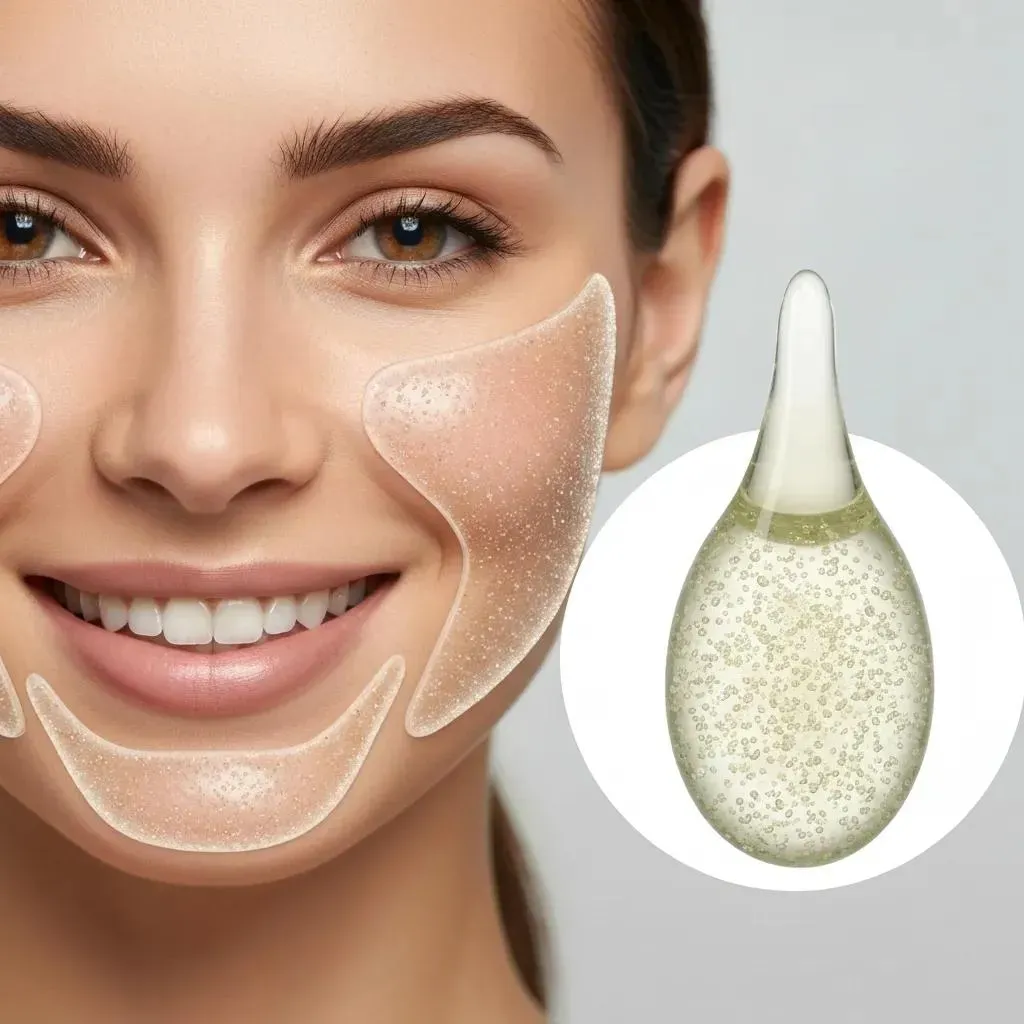
Calcium hydroxylapatite fillers are made of microspheres suspended in a gel that restores structure immediately and prompts collagen to form around the particles over time. That combination of instant volume and progressive collagen stimulation makes CaHA a strong choice for deeper contouring - think jawline definition, chin enhancement, and correcting pronounced nasolabial folds. Because the carrier gel resorbs and collagen remains, CaHA often lasts longer than many HA products, commonly 12-18 months depending on the area and patient factors. Injection depth and technique matter: trained injectors place CaHA deeply (near the bone) for structural lift and to minimize palpable nodules. Understanding these differences helps you know when CaHA is a better fit than HA or PLLA for long-lasting scaffold-like support.
Which Popular Dermal Filler Brands Are Best for Specific Facial Concerns?
Brand choice usually follows filler type and treatment area: the Juvederm and Restylane families offer multiple HA formulations with different cohesivity, Radiesse provides CaHA for structural support, and Sculptra (PLLA) encourages gradual collagen rebuilding. Matching brand characteristics to your goals helps set realistic expectations for longevity and appearance, from subtle lip shaping to a non-surgical midface lift. Below is a practical comparison table that summarizes active ingredient, best uses, and typical longevity to help patients and clinicians pick the right product.
| Brand | Active Ingredient / Mechanism | Best Use / Typical Longevity |
|---|---|---|
| Juvederm (Voluma, Volbella, Ultra, Volux) | Hyaluronic acid; formulas vary in cross-linking for lift or softness | Cheeks/jaw (Voluma, Volux) and lips/fine lines (Volbella, Ultra); 6-18 months depending on product |
| Radiesse | Calcium hydroxylapatite microspheres in gel; stimulates collagen | Jawline, chin, deep folds, hands; results often last 12-18 months or longer |
| Sculptra | Poly-L-lactic acid; gradual collagen biostimulation | Wider facial volume restoration over multiple sessions; effects develop over 2-6 months and can last 2+ years |
This table links mechanism to choice and longevity. Which brand fits you depends on how quickly you want results, whether reversibility matters, and the treatment area. Growing Younger Clinic carries several of these leading options and can recommend the best product during a free consultation that looks at your anatomy and goals.
What Are the Key Features of Juvederm Fillers for Lips, Cheeks, and Lines?
The Juvederm family offers formulas tuned for different tissue planes - Volbella and Ultra are softer for lips and perioral lines, while Voluma and Volux are firmer for cheek and jawline lift; Ultra Plus fills the gap for moderate volume. Cross-linking density and particle size affect cohesivity and lift: softer gels integrate smoothly in mobile areas like the lips, and firmer gels resist deformation for structural augmentation. Longevity varies: softer products often last 6-12 months and higher-lift options 12-18 months, influenced by metabolism and treated area. Expected short-term effects include swelling and bruising, which respond to routine aftercare. Patients who want the option to reverse results commonly choose HA-based Juvederm because hyaluronidase allows correction when needed.
How Do Radiesse and Sculptra Differ in Collagen Stimulation and Longevity?
Radiesse (CaHA) and Sculptra (PLLA) both stimulate collagen but follow different timelines and treatment strategies. Radiesse delivers immediate volume and scaffold support; collagen forms around the microspheres and results are often visible right away and can last 12-18 months as the collagen matures. Sculptra relies on a series of treatments spaced over weeks and produces gradual collagen rebuilding that peaks at 2-6 months; durability often extends beyond two years after a full course. Planning differs: Radiesse is good for focused structural lift, while Sculptra is better for broad, long-term volume restoration.
What Are the Benefits and Considerations of Using Dermal Fillers for Facial Rejuvenation?
Dermal fillers restore volume, smooth wrinkles, enhance contours, and can create non-surgical facelift effects - but they do come with trade-offs such as reversibility, downtime, cost, and potential risks. HA gives immediate results and is reversible with hyaluronidase; PLLA delivers staged regenerative change; CaHA offers durable scaffolded support. Important considerations include your medical history, aesthetic goals, injector experience, and whether you want the ability to reverse results.
| Outcome / Risk | Associated Fillers | Mitigation / Expected Result |
|---|---|---|
| Immediate volume and reversible results | Hyaluronic acid (Juvederm, Restylane) | Hyaluronidase available; short-to-medium longevity (6-18 months) |
| Structural lift and collagen stimulation | Calcium hydroxylapatite (Radiesse) | Deep injection technique; longer durability (12-18 months+) |
| Gradual long-term collagen restoration | Poly-L-lactic acid (Sculptra) | Multiple sessions required; durable results (2+ years) |
| Bruising, swelling | All fillers | Pre/intra/post-care, cold compresses, avoid blood thinners when appropriate |
| Vascular occlusion (rare) | All fillers | Use experienced injectors, safe technique, prompt hyaluronidase if HA involved |
This mapping clarifies trade-offs: HA for controllable, reversible changes; CaHA for immediate scaffolded contour; PLLA for long-term regenerative approaches. Next we explain how fillers restore volume and list common side effects with ways to minimize risk.
How Do Dermal Fillers Restore Volume and Reduce Wrinkles?
Fillers replace lost subcutaneous and deep fat or lift soft tissue to reduce shadowing and soften both dynamic and static wrinkles. HA works by binding water and filling space, while CaHA and PLLA stimulate new collagen. Restoring midface volume, for example, can support the lower face and lessen nasolabial folds; filling tear troughs reduces under-eye hollows. Strategically placed fillers can affect local lines and overall facial balance, and combining treatment types often gives a more natural result than treating a single line.
What Are Common Side Effects and How Can Risks Be Minimized?
Common side effects include temporary redness, swelling, tenderness, and bruising at injection sites; these usually resolve in days to two weeks. Rare but serious complications, such as intravascular occlusion, require immediate recognition and treatment. Risk reduction starts with proper screening for contraindications, choosing a licensed, experienced injector, using sterile technique, and having emergency protocols and reversal agents on hand for HA treatments.
How Is the Dermal Filler Procedure Performed and What Is the Recovery Like?
The patient journey begins with a consultation to assess anatomy and goals, moves to a treatment session with local or topical anesthesia as needed, and includes immediate aftercare and follow-up to check integration and safety. During consultation clinicians evaluate skin quality and facial proportions, discuss filler options, longevity, and trade-offs like reversibility, and build a customized plan.
| Filler Type | Typical Downtime | Aftercare Recommendations |
|---|---|---|
| Hyaluronic acid (HA) | 1-7 days (swelling/bruising) | Cold compresses, avoid strenuous exercise 24-48 hours, follow-up for adjustments |
| Calcium hydroxylapatite (CaHA) | 2-14 days (possible swelling) | Gentle massage if advised, avoid heat/excessive pressure, monitor for nodularity |
| Poly-L-lactic acid (PLLA) | Minimal immediate downtime; gradual results | Multiple sessions spaced weeks apart, massage per protocol, plan for staged treatments |
What Should Patients Expect During and After Dermal Filler Injections?
At your appointment expect topical or local anesthetic, short injections with intermittent assessment, and immediate improvement that may be softened by initial swelling. The procedure typically takes 30-60 minutes. You may feel pressure and mild discomfort during injection, and results settle over days as swelling goes down and the product integrates. Aftercare includes avoiding strenuous exercise for 24-48 hours, sleeping with your head elevated the first night if cheeks or under-eyes were treated, and using cold compresses to reduce bruising.
How Long Do Different Types of Dermal Fillers Last?
Longevity depends on filler class, treatment area, metabolism, and product formulation. HA fillers usually last 6-18 months; CaHA commonly endures 12-18 months or longer because of collagen scaffolding; PLLA builds volume gradually and can last two years or more after a full course. Factors that affect duration include injection depth, product rheology, metabolic rate, and mechanical stress at the site - for example, lip fillers often resorb faster than cheek fillers.
How Do Dermal Fillers Compare to Other Facial Rejuvenation Treatments?
Fillers restore volume and contour mechanically or biologically. Neuromodulators like Botox relax muscle activity to soften dynamic wrinkles, lasers improve skin texture and pigmentation, and surgical facelifts reposition tissues. Choose based on the problem and how invasive you want to be.
- Fillers: Treat volume loss, contour, and static lines with immediate to gradual results depending on product.
- Neuromodulators (Botox): Best for dynamic wrinkles from muscle movement; quick procedure with minimal downtime.
- Laser/Resurfacing: Improves skin texture, tone, and superficial lines; may require recovery time.
- Surgery (Facelift): Offers the most durable structural lift but involves operative risks and longer recovery.
What Are the Differences Between Dermal Fillers and Botox for Aging Skin?
Fillers and Botox complement each other. Fillers add or restore volume to correct hollowing and folds; Botox relaxes muscles to reduce expression lines by temporarily blocking neurotransmitter release. Use fillers for tear troughs, cheeks, and lips; use Botox for crow’s feet, frown lines, and forehead lines caused by repeated muscle movement.
When Should Patients Consider Combining Fillers with Other Procedures?
Consider combination therapy when you have multiple signs of aging - volume loss, texture changes, and dynamic wrinkles - because an integrated approach yields more complete, natural results than treating one issue alone. A common sequence is restoring midface volume with fillers to soften folds, then using laser resurfacing to improve skin texture, and adding neuromodulators to control dynamic lines.
How Can You Choose the Right Dermal Filler and Schedule a Consultation?
Choosing the right filler depends on anatomy, your aesthetic goals, desired longevity, whether reversibility matters, budget, and medical history. A simple checklist helps you prepare for a productive consultation.
- Clarify your aesthetic priorities and bring reference photos showing results you like.
- List medical history, allergies, and past cosmetic procedures to help assess safety.
- Decide if reversibility is important (choose HA if so) and consider how long you want results to last.
- Prepare questions about your injector’s experience, the product options, and follow-up care.
What Factors Influence the Choice of Dermal Filler for Your Facial Needs?
Key factors are treatment area, desired durability, importance of reversibility, skin quality, and overall facial proportions - each influences product choice and technique. For under-eye hollows, low-viscosity, smooth HA that integrates well is often chosen to avoid visibility issues; for jawline or chin projection, higher-viscosity HA or CaHA provides stronger support.
How Does Growing Younger Clinic Provide Expert Care and Free Consultations in Madison, AL?
Growing Younger Clinic is a family-owned medical spa with an M.D. on site and a team of licensed professionals specializing in injectables and laser services. We offer free consultations at our Madison, AL location to review treatment options, assess facial anatomy, and recommend specific filler brands - including Belotero, Juvederm (Volux, Ultra Plus, Volbella, Voluma), Radiesse, Versa, RHA, and Sculptra - based on your goals.
- Address: 8103 Highway 72 W, Suite C, Madison, AL 35758
Frequently Asked Questions
What are the potential risks associated with dermal fillers?
Dermal fillers are generally safe, but possible risks include bruising, swelling, and redness that usually resolve in a few days. Rare but serious complications include vascular occlusion, which can cause tissue damage or vision issues if not treated promptly. To reduce risk, choose an experienced injector who follows safety protocols.
How can I prepare for a dermal filler consultation?
Prepare by reviewing your aesthetic goals and bringing photos that show the look you want. Note your medical history, allergies, and any prior cosmetic procedures. Think about whether you want a reversible option (HA) and write down questions about the injector’s experience.
What is the difference between temporary and permanent fillers?
Temporary fillers like hyaluronic acid last from about 6 to 18 months depending on product and area; they’re absorbed over time and can be adjusted or reversed. Permanent fillers offer long-lasting results but carry greater risk and less flexibility for changes.
How do I know if I am a good candidate for dermal fillers?
Good candidates are adults in generally good health with realistic expectations. Typical concerns include volume loss, wrinkles, or a desire for contour improvement. People with certain medical conditions, allergies, or those who are pregnant or breastfeeding may not be suitable.
What aftercare is recommended following dermal filler injections?
Aftercare helps optimize results: use cold compresses to reduce swelling and bruising, avoid strenuous exercise for 24-48 hours, and try not to touch or massage treated areas unless instructed. Stay hydrated and avoid alcohol and blood thinners for a few days if advised.
Can dermal fillers be combined with other treatments?
Yes. Fillers often work well alongside neuromodulators like Botox, laser treatments, or chemical peels to address different signs of aging - volume loss, dynamic wrinkles, and skin texture.
Conclusion
Knowing the differences between filler types helps you choose the best approach for restoring volume and softening wrinkles. Each class offers distinct benefits - immediate correction with HA, scaffolded support with CaHA, and long-term collagen rebuilding with PLLA. Working with experienced professionals ensures a safe, personalized plan that meets your goals. Schedule a free consultation at Growing Younger Clinic to review your options and design a treatment path that feels right for you.